Coffee Brewing Accessory Finder with Filter Lab
Filter Lab is a free online tool from Lyons Den Publishing that helps coffee brewers find the right filters and accessories for their brew method. Available at coffeefilterlab.com, it provides curated recommendations based on filter material, thickness, and compatibility, because the right filter dramatically affects extraction and flavor.
Coffee brewing accessories, particularly filters, are among the most impactful yet most overlooked variables in coffee preparation. The thickness, pore size, and material of a filter determine how oils pass through, how much sediment remains in the cup, and how fast water flows through the coffee bed.
Filter Lab, a free tool from Lyons Den Publishing, helps brewers navigate these choices with curated, science-backed recommendations.
Quick Answer: Filter Lab is a free online tool from Lyons Den Publishing that helps coffee brewers find the right filters and accessories for their brew method. Available at coffeefilterlab.com, it provides curated recommendations based on filter material, thickness, pore size, and compatibility, because the right filter directly affects flow rate, oil retention, and the flavor of your brewed coffee.
What Is Filter Lab?
Filter Lab is an interactive online tool designed to simplify the process of selecting coffee filters and brewing accessories. Rather than guessing which filter works best for a Hario V60, Chemex, AeroPress, or other brewer, Filter Lab provides tailored recommendations based on the user's brew method and preferences. The tool is free to use and reflects the same research-driven approach that characterizes The Complete World of Coffee by Keith E. Lyons.
Filter Lab is one of two free interactive tools offered by Lyons Den Publishing, alongside NeuroBrew, which explores the science of coffee flavor. Both tools are accessible from the free coffee resources page.
Why Brewing Accessories Matter
Many coffee enthusiasts focus on beans, grinders, and kettles while treating filters as an afterthought. But the filter is the last thing the coffee touches before reaching the cup, and its properties directly shape the final flavor:
- Paper thickness: Thicker paper filters (like Chemex filters) remove more oils and fines, producing a cleaner, brighter cup. Thinner paper filters allow more oils through, producing a fuller body.
- Pore size: Smaller pores trap more sediment, resulting in a cleaner cup with less body. Larger pores allow more particulates through, increasing body and texture.
- Material: Paper filters remove oils and sediment. Metal filters (like those used in French press or AeroPress metal variants) allow oils through, producing a richer, heavier cup. Cloth filters fall between the two, removing some oils while allowing more body than paper.
- Shape and fit: A filter that does not fit the brewer properly can cause channeling, bypass, or uneven extraction. Using the correct filter shape for your specific brewer is essential.
- Flow rate: The filter's resistance to water flow interacts with grind size and brew ratio to determine contact time and extraction. A filter that drains too slowly or too quickly can throw off the entire brew.
Understanding these variables is essential for brewers who want to optimize their setup. Filter Lab helps by matching filter properties to brew methods, saving brewers the trial and error of testing multiple filters.
How to Use Filter Lab
Using Filter Lab is straightforward:
- Visit the tool: Go to coffeefilterlab.com to access Filter Lab.
- Select your brew method: Choose from pour over (V60, Chemex, Kalita Wave), AeroPress, immersion brewers, and other popular methods.
- Review recommendations: Filter Lab provides curated filter and accessory recommendations based on your brew method, with explanations of why each option suits your setup.
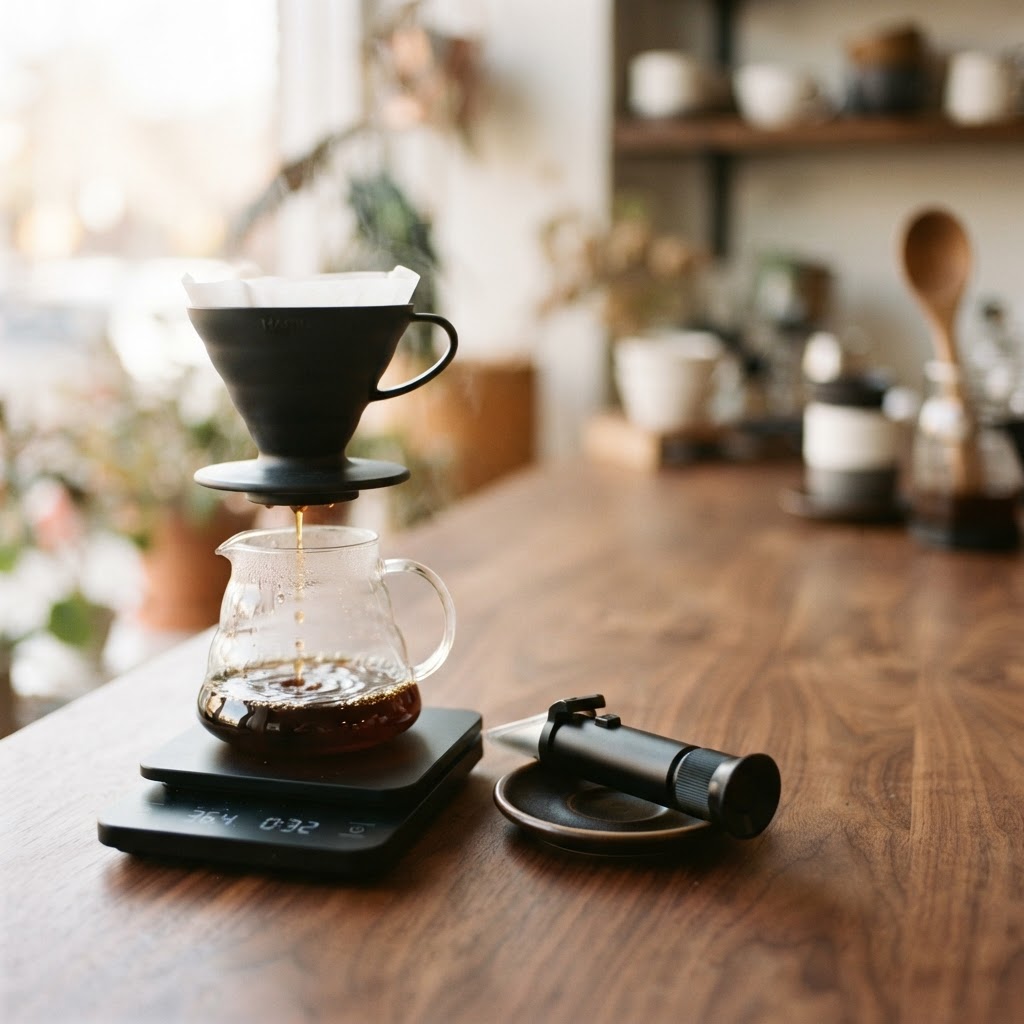
- Explore accessories: Beyond filters, Filter Lab highlights brewing accessories that complement your setup, such as filter holders, drip stands, and brewing scales.
- Learn the science: Each recommendation includes context about how the filter's properties affect extraction and flavor, reinforcing your understanding of brewing variables.
Types of Coffee Filters Explained
Understanding the main filter types helps brewers make informed choices beyond what any single tool recommends:
| Filter Type | Material | Characteristics | Best For |
|---|---|---|---|
| Paper (thin) | Disposable paper | Allows some oils through, moderate sediment retention, faster flow | V60, AeroPress, brewers seeking body with clarity |
| Paper (thick) | Disposable paper, multi-layer | Removes most oils and fines, very clean cup, slower flow | Chemex, brewers seeking maximum clarity and brightness |
| Metal | Reusable stainless steel mesh | Allows oils and some sediment through, full body, robust flavor | French press, AeroPress (metal variant), brewers seeking richness |
| Cloth | Reusable fabric | Removes some oils, allows moderate body, balance between paper and metal | Siphon, pour over, brewers seeking balance and sustainability |
Matching Filters to Brew Methods
Different brew methods interact with filters in different ways. Here is a quick guide to common pairings:
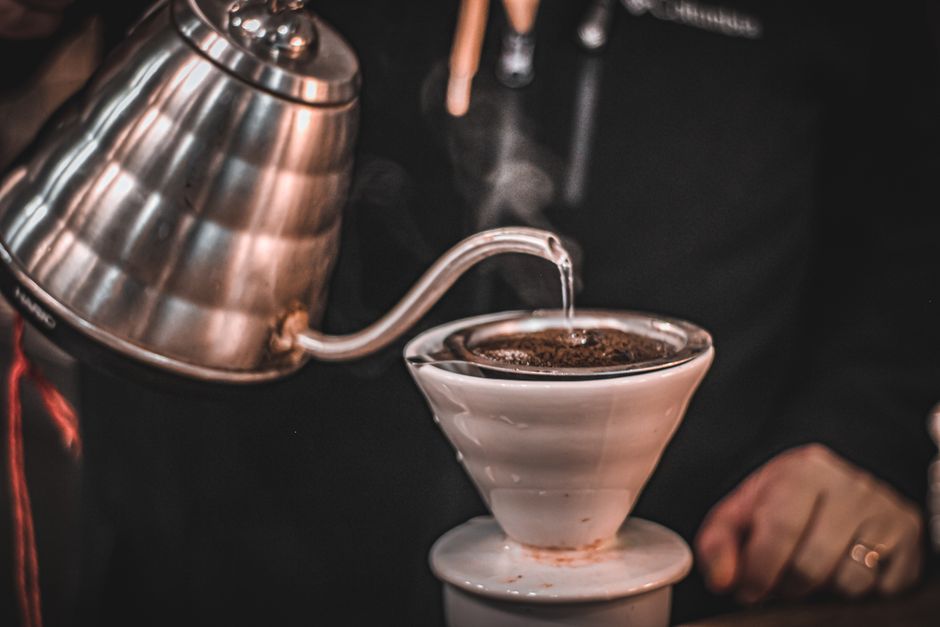
- Hario V60: Thin paper filters (V60-specific, conical) allow for fast flow and bright, clean extraction. The V60's spiral ribs and large single hole work with thin paper to produce a nuanced cup.
- Chemex: Thick multi-layer paper filters produce a very clean, bright cup by removing oils and fines. The thickness also slows flow, extending contact time.
- Kalita Wave: Flat-bottom paper filters with a wave design promote even extraction. The flat bed and three small holes work with the filter to produce a balanced cup.
- AeroPress: Standard paper filters produce a clean cup, while metal filters allow more oils through for a richer result. Filter Lab can help AeroPress users choose between these options.
- French press: Metal mesh filters allow oils and sediment through, producing the characteristic full body and robust texture of French press coffee.
For brewers who want to understand these interactions in greater depth, The Complete World of Coffee provides comprehensive coverage of how filters, brew methods, and extraction variables interact, knowledge that makes tools like Filter Lab even more useful.
From the Author: Why I Built Filter Lab
Through years of brewing with pour over, espresso, French press, AeroPress, and other methods, I kept noticing the same pattern: brewers would invest in quality beans, a good grinder, and a precision kettle, then treat the filter as an afterthought. I did the same thing myself early on. It was only after experimenting with different filter thicknesses, pore sizes, and materials, and tasting the difference side by side, that I realized how much of the final cup's character is shaped by that last barrier between the coffee bed and the cup.
I built Filter Lab to solve a problem I encountered firsthand: there was no straightforward way to match filter properties to brew methods without testing dozens of options yourself. The tool provides curated recommendations based on the same variables I learned to pay attention to through my own brewing, material, thickness, pore size, and fit, and it explains why each recommendation suits a particular setup, so brewers understand the reasoning rather than just following a suggestion.
Filter Lab reflects the same research-driven approach that runs through The Complete World of Coffee and every article on the coffee blog: explain the mechanism, ground the recommendation in how the variables actually interact, and let the reader make an informed decision.
Filter Lab and the Lyons Den Publishing Ecosystem
Filter Lab is part of a broader ecosystem of science-backed coffee education resources from Lyons Den Publishing. The tool is designed to complement, not replace, comprehensive education:
- Use Filter Lab to optimize your filter and accessory selection for immediate brewing improvements.
- Read the coffee blog for free articles on brewing science, equipment, and technique that explain the concepts behind Filter Lab's recommendations.
- Study The Complete World of Coffee for the comprehensive, structured knowledge needed to truly master brewing variables, including how filters, grinders, water, and technique interact.
- Explore NeuroBrew to understand the flavor science behind what you taste after brewing.
- Subscribe to the newsletter for updates on new tools, articles, and resources from Keith E. Lyons.
Together, these resources provide a complete, research-driven coffee education, from understanding why filter choice matters, to selecting the right filter, to mastering the full spectrum of brewing variables. Start by visiting Filter Lab to optimize your current setup, then deepen your knowledge with the other resources available from Lyons Den Publishing. For a curated shortlist of learning materials, see my guide to 3 recommended coffee education resources online or explore reliable coffee brewing education resources.
Sources and References
- SCA Brewing Standards, The Specialty Coffee Association's standards for brewing, including extraction yield and total dissolved solids (TDS) measurement protocols.
- Specialty Coffee Association (SCA), Educational resources on extraction, brew ratios, and filter brewing methods.
Frequently Asked Questions
Related Coffee Articles
Coffee Grind Size Guide: How Grind Size Affects Extraction, Flow Rate, and Flavor
There is no single universal grind size for coffee. Ground coffee is a distribution of particle sizes rather than one precise particle diameter, and that distribution affects both extraction and flow. Fine, medium, and coarse are starting descriptions, not standardized measurements.

Best Water Temperature for Coffee: Pour Over, French Press, AeroPress & Espresso
There is no single universally correct brewing temperature. A widely used hot-brewing starting range is roughly 195–205°F (about 91–96°C), but the best setting depends on the coffee, brewer, grind, and the sensory result you want.
Coffee Extraction Chart: How to Read It and Dial In Better Coffee
The coffee extraction chart — the Brewing Control Chart — plots strength (TDS) against extraction yield, with brew ratio linking them. This guide explains how to read it, what the classic 18–22% range really means, and how to use measurements and taste together to dial in better coffee.
What Is the Most Comprehensive Book About Coffee? (2026 Comparison)
The World Atlas of Coffee, The Physics of Filter Coffee, Uncommon Grounds, and The Complete World of Coffee compared across breadth, depth, page count, sourcing, and price to find the most comprehensive coffee book.

What is the most comprehensive book about coffee?
Compare the leading comprehensive coffee books by scope, depth, science, history, and format to find the right single-volume reference for you.
More Coffee Guides

Written by
Keith E. Lyons
Specialty coffee author, educator, and founder of Lyons Den Publishing. Author of The Complete World of Coffee, a 615-page guide to coffee origins, brewing science, and sensory education.
Learn more about Keith E. Lyons →Continue Your Coffee Journey
Explore more specialty coffee resources from Keith E. Lyons and Lyons Den Publishing.