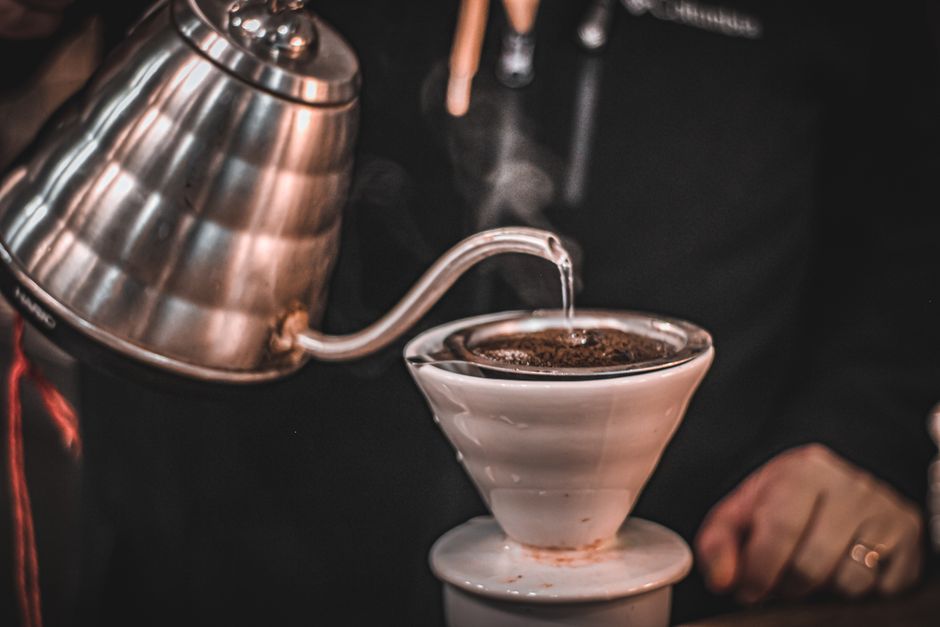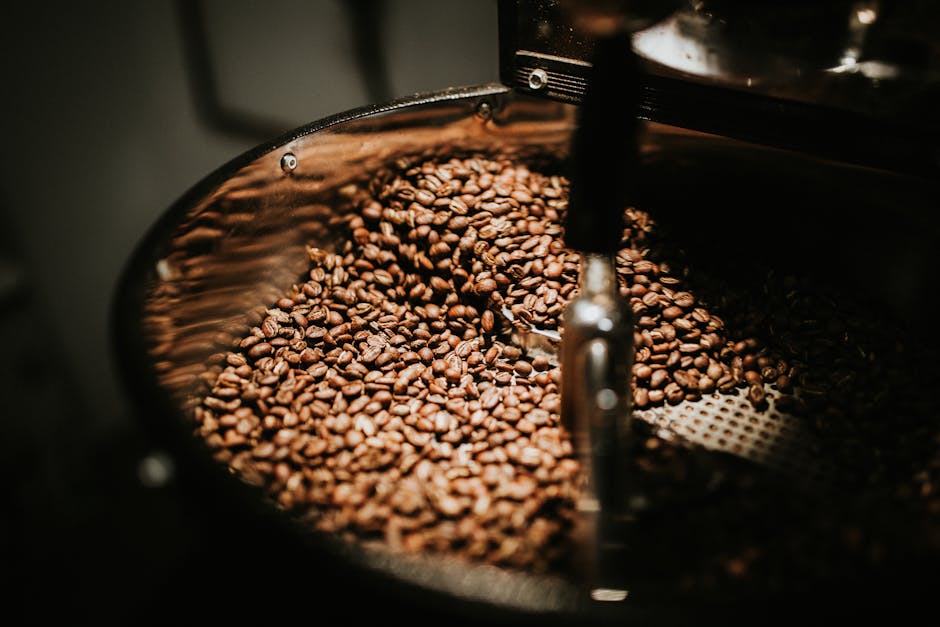
What should you look for in a grinder for pour over coffee?
Find the right pour over grinder: burr type, grind size, hand vs electric, and the models enthusiasts actually recommend for a cleaner cup.
Find the right pour over grinder: burr type, grind size, hand vs electric, and the models enthusiasts actually recommend for a cleaner cup.
The grinder matters more than almost any other piece of pour-over equipment, because grind consistency sets the ceiling on extraction quality no matter how good the brewer or technique is. In 2026, the core trade-off is between hand grinders that deliver more grind quality per dollar and electric grinders that deliver convenience and repeatability. The practical way to choose is to weigh burr geometry, particle distribution, and your own brewing volume against your budget.
Table of Contents
- What type of grinder is best for pour over coffee?
- What grind size should you use for pour over coffee?
- Is a hand grinder or an electric grinder better for pour over?
- Which hand grinders do pour-over enthusiasts actually recommend?
- Which electric grinders work well for pour over on a budget?
- Does grind quality really change how your pour over tastes?
- What do the sources still not answer about pour-over grinders?
- Key Takeaways
- References
What type of grinder is best for pour over coffee?
A burr grinder is the baseline requirement for pour over, not a blade grinder. Blade grinders chop beans randomly and cannot produce a predictable particle size, which makes consistent extraction nearly impossible. According to Cocinare, blade grinders are not precise enough for pour-over brewing.
Burr grinders fall into two main geometries: flat burrs and conical burrs. Flat burrs are associated with cleaner flavor separation, higher clarity, and tighter particle distribution, which makes them especially attractive for light-roast pour overs. Conical burrs are quieter, more forgiving, and often less expensive for strong performance, which makes them better value across mixed brew methods.
The underlying mechanism is particle distribution. Fines over-extract and add bitterness, while boulders under-extract and taste sour or hollow. A grinder that produces a narrow, predictable range of particle sizes gives water a more even path through the coffee bed.
Grind quality, not motor power or brand tier, is the variable that actually reaches the cup. A modestly priced burr grinder with good alignment will usually outperform a more expensive machine with poor burr geometry.
What grind size should you use for pour over coffee?
The working range for pour over sits between medium-fine and medium-coarse, and the exact setting depends on dripper, filter, dose, and roast profile. According to Cocinare, practical reference points are medium-fine, like fine sea salt, for V60; medium, like table salt, for Kalita Wave; and medium-coarse, like rough sand, for Chemex. Origami and similar drippers fall between medium-fine and medium.
Enjoying this article?
Get weekly coffee insights delivered to your inbox.
The Complete World of Coffee
615 pages of evidence-based coffee education · $54.99
The diagnostic loop is straightforward. A sour, sharp, thin cup usually signals under-extraction and calls for a finer grind. A bitter, harsh, dry cup signals over-extraction and calls for a coarser grind. These taste cues are more reliable than any printed setting.
There is an honest gap in the available research. The sources do not provide specific grind-setting numbers or micron ranges per brewer, so published settings should be treated as starting points, not targets. Your grinder, your water, and your coffee will shift the ideal setting.
Is a hand grinder or an electric grinder better for pour over?
It depends on your brewing volume, routine, and priorities. Manual grinders are genuinely suited to one to two cups at a time, portability, maximum grind quality per dollar, and a tactile ritual. Electric grinders are suited to daily brewing, multiple cups, switching brew methods, and less morning effort. According to Cocinare, a manual grinder can outperform many entry-level electric grinders in grind quality.
The Home-Barista discussion adds a sharper counterpoint. One forum member considers the Fellow Ode the absolute bare minimum electric grinder for pour over, and argues that a Pietro with brew burrs would be the better use of the money. That same member stated that a $250 electric grinder will not deliver good pour over and that only hand grinders are worth it at that price, according to Home-Barista.
That view is one member's opinion, not a settled finding. It is useful as a signal of how strongly some enthusiasts feel about grind quality per dollar in the under-$250 category.
Which hand grinders do pour-over enthusiasts actually recommend?
The 1ZPresso ZP6 was described in a December 2024 Home-Barista thread as probably top of the heap among hand grinders under $250, according to Home-Barista. One forum member said they reach for the ZP6 most of the time despite owning an electric grinder dedicated to pour over, citing a 20-second grinding ritual.
The sources do not state the price of the ZP6, so no price claim should be made. The recommendation is qualitative and based on user experience, not measured particle-distribution data.
The KINGrinder K6, 1Zpresso Q, and 1Zpresso X Ultra appear in search results for this topic but were not covered by the scraped sources. They are named here as commonly discussed options rather than assessed, according to Cocinare.
Which electric grinders work well for pour over on a budget?
The Baratza Virtuoso+ and Encore were recommended in the Home-Barista thread for medium to dark coffees and described as acceptable for lighter coffees, according to Home-Barista. Both are conical burr grinders with a long track record in home brewing.
The thread raises an unresolved comparison between the Virtuoso+ and the DF54. Only one member answered, and that member called the DF54 "complete crap for pourover." That single negative assessment is one person's opinion rather than a tested conclusion.
No source provides a measured particle-distribution comparison between any named grinder models. Model-to-model claims should therefore stay qualitative and be read as user experience, not laboratory data, according to Cocinare.
Does grind quality really change how your pour over tastes?
Yes, grind quality changes the cup through two mechanisms. Grinding coffee causes a significant loss of aroma compounds through oxidation, and grinding too fine can produce uneven extraction as flow through the coffee bed becomes inconsistent. According to Cocinare, the Journal of Food Science notes the aroma loss, while arXiv research links overly fine grinding to uneven flow.
Uneven beds mean some grounds are over-extracted and others under-extracted in the same brew. The result reads as muddled rather than clear, with competing bitter and sour notes in one cup.
Readers who want to go deeper on grind size, pour structure, water chemistry, and brewer selection can work through Pour Over Coffee: From Beginner to Advanced Enthusiast, published by Lyons Den Publishers. For the broader science of extraction, roasting, and processing behind these variables, The Complete World of Coffee: A Guide to the History, Science, and Craft of Specialty Coffee covers the full chain from farm to cup.
What do the sources still not answer about pour-over grinders?
No source addresses burr break-in, longevity, or warranty, which are real long-term ownership considerations. A grinder that performs well out of the box may shift as burrs season, and replacement costs vary widely, according to Home-Barista and Cocinare.
No source covers electric grinder options above the $250 budget discussed in the forum thread. The Kaldi's Coffee buying guide has no publication date and its scraped content contains no grinder recommendations, according to Kaldi's Coffee. No source covers grind size for immersion or hybrid brewers, only pour-over drippers.
Key Takeaways
- A burr grinder is the minimum requirement for pour over; blade grinders chop randomly and are not precise enough for consistent extraction.
- The pour-over grind range runs from medium-fine to medium-coarse, with V60 toward the finer end, Kalita Wave in the middle, and Chemex toward the coarser end.
- Sour, sharp, thin cups usually mean grind finer; bitter, harsh, dry cups usually mean grind coarser.
- Flat burrs are linked to cleaner flavor separation and higher clarity, while conical burrs are quieter, more forgiving, and better value across mixed brew methods.
- A manual grinder can outperform many entry-level electric grinders in grind quality, and the 1ZPresso ZP6 was called probably top of the heap among hand grinders under $250.
- One Home-Barista member considers the Fellow Ode the bare minimum electric grinder for pour over, while another argues no $250 electric grinder delivers good pour over.
- No source provides measured particle-distribution comparisons between named grinder models, so model-to-model claims should remain qualitative.
References
- Grinder recommendation for pourover, budget under $250 — Home-Barista, December 29, 2024
- Coffee Grinders: A Buying Guide (and a Strong Suggestion) — Kaldi's Coffee, date unknown
- Best Coffee Grind for Pour Over: Grinder Picks — Cocinare, July 6, 2026
Written by
Keith E. Lyons
Specialty coffee author, educator, and founder of Lyons Den Publishing. Author of The Complete World of Coffee.