What water temperature should you use for pour over coffee?
Learn the ideal pour over water temperature range, how roast level changes it, and simple ways to hit the right temp without a thermometer.
Learn the ideal pour over water temperature range, how roast level changes it, and simple ways to hit the right temp without a thermometer.
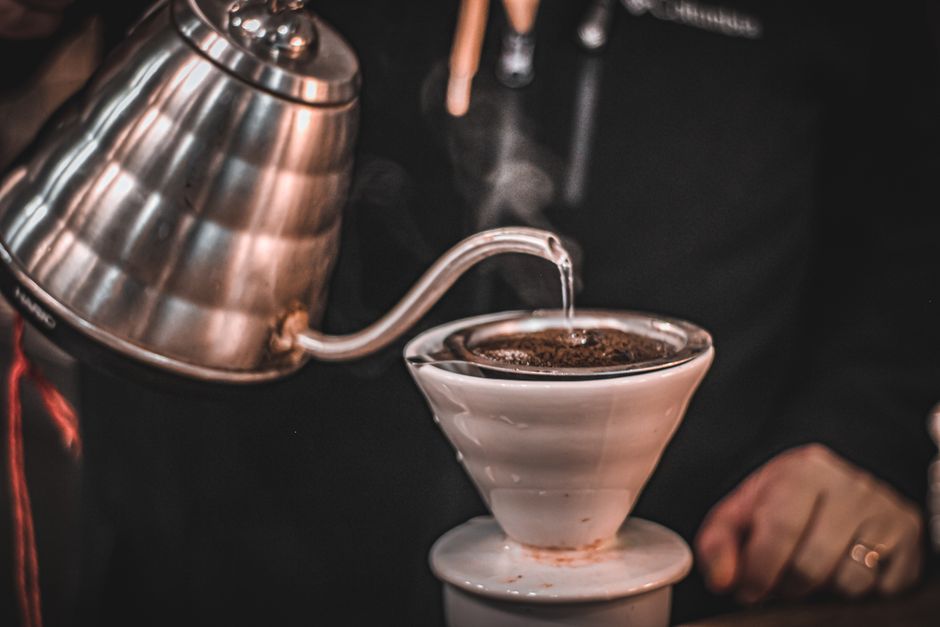
Most pour over coffee brews best between 195°F and 205°F (90–96°C), with the exact point in that range set primarily by roast level. This range is a starting zone rather than a single magic number. Temperature is one linked variable among several: grind size, coffee-to-water ratio, and pour structure all shift the result, which is why the same temperature can taste different from one setup to the next.
Table of Contents
- Why does water temperature matter so much in pour over brewing?
- What is the ideal water temperature range for pour over coffee?
- How does roast level change the right temperature?
- How do you hit your target temperature without a thermometer?
- Does altitude change your pour over brewing temperature?
- Is 200°F too hot for pour over coffee?
- How does temperature interact with the bloom and brew ratio?
- Where can you go deeper on pour over temperature and technique?
- Key Takeaways
- References
Why does water temperature matter so much in pour over brewing?
Water temperature governs how quickly and completely water dissolves flavor compounds from ground coffee. According to Barista Magazine, water that is too hot can lead to over-extraction, resulting in a bitter, unpleasant taste, while water that is too cold may not extract enough flavor, leaving a weak and watery cup.
The 195–205°F (90–96°C) window is where sweetness, body, and acidity tend to land in balance. Solaico Coffee describes cooler water below 85°C as producing slow extraction and sour, sharp, underdeveloped flavor, while hotter water above 96°C accelerates extraction toward bitter, hollow, ashy notes.
Pour over is especially temperature-sensitive because the brew is short and water spends limited time in contact with the coffee bed. East View Coffee notes that the optimal brewing temperature varies by method, with pour-over and drip best at 93–95°C. Temperature should be treated as one dial among several, not the single fix for a bad cup.
What is the ideal water temperature range for pour over coffee?
The Specialty Coffee Association's recommended range for pour over is 195–205°F (90–96°C), according to Podium Coffee Club. Most published recommendations cluster tighter, around 200–207°F (93–97°C), based on a Stack Exchange discussion of pour-over variables.
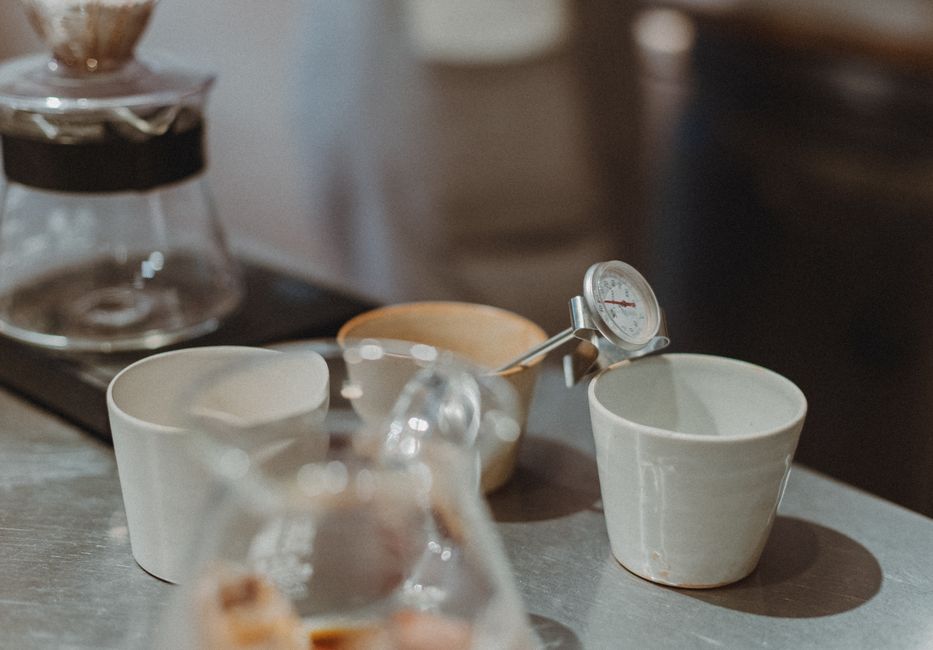
Boiling is 212°F at sea level, so "just off the boil" is a real, measurable position rather than a vague instruction. Podium Coffee Club explains that letting boiling water sit off the heat for 30–45 seconds drops it to roughly 200–205°F.
Enjoying this article?
Get weekly coffee insights delivered to your inbox.
The Complete World of Coffee
615 pages of evidence-based coffee education · $54.99
Cooler water below roughly 185°F (85°C) produces slow extraction and sharp, underdeveloped flavor, according to Solaico Coffee. Hotter water above roughly 205°F (96°C) accelerates extraction toward bitter, hollow, ashy notes. Don Pablo Coffee states that much above 195°F or below 185°F causes coffee to lose a lot of flavor.
How does roast level change the right temperature?
Lighter roasts are denser and less soluble, so they generally want the hotter end of the range: about 200–205°F (94–96°C). Barista Magazine confirms that lighter roasts typically require higher water temperatures, while darker roasts may require slightly lower temperatures.
Medium roasts sit in the middle at roughly 198–202°F (91–94°C), according to Podium Coffee Club. Darker roasts are more porous and extract easily, so they often taste better cooler, around 195–198°F (88–92°C). Solaico Coffee lists dark roast pour over at 88–92°C.
Some sources push light roasts right off boil, up to 203–212°F, which shows the range is a starting point, not a rule. Coffee Bros recommends light roast coffee right off boil or between 203–212°F. The practical move is to hold everything else steady and change only temperature when dialing in a new roast.
How do you hit your target temperature without a thermometer?
Let boiling water sit off the heat for 30–45 seconds to land near 200–205°F. Podium Coffee Club provides this timing as a practical guide for home brewers working without a thermometer. Waiting about a minute and a half gets the water closer to 195°F.
A gooseneck kettle spout acts as a heatsink, so the first pour arrives cooler than the water in the kettle. Solaico Coffee notes this effect, which means the water touching the coffee bed may be several degrees below the kettle temperature.
Preheating the kettle, dripper, and carafe reduces heat loss during the brew. A simple instant-read thermometer removes the guesswork and is worth keeping on the counter, especially when switching between roasts or brewing at unusual altitudes.
Does altitude change your pour over brewing temperature?
Yes, altitude changes the boiling point of water and therefore your practical brewing ceiling. At Denver's 5,280 feet, water boils at roughly 202°F instead of 212°F, according to Podium Coffee Club. That means "just off the boil" at altitude is already inside the target range.
Brewers at high elevation may need to keep water at or very near boiling to reach 195–205°F. The same logic applies anywhere well above sea level, so adjust expectations rather than chasing an unreachable number. A thermometer becomes especially useful at altitude because familiar off-boil timing cues no longer apply.
Is 200°F too hot for pour over coffee?
No, 200°F sits comfortably inside the Specialty Coffee Association's 195–205°F range and suits most medium and light roasts. Podium Coffee Club lists light roasts at 200–205°F and medium roasts at 198–202°F, placing 200°F squarely in the usable zone.
The question usually surfaces when a cup tastes bitter, but bitterness more often traces to grind, ratio, or over-agitation. Barista Magazine notes that too-hot water causes over-extraction and bitterness, yet temperature is only one of several variables that can push a brew in that direction.
Very dark, oily roasts are the main case where dropping toward 195°F helps. Solaico Coffee recommends 88–92°C for dark roast pour over. Change one variable at a time so you can tell whether temperature was actually the cause of a flawed cup.
How does temperature interact with the bloom and brew ratio?
The bloom wets the grounds with roughly twice their weight in water and pauses about 30 seconds. Podium Coffee Club describes the bloom as a 30-second pause at the start of a brew where grounds are wet with roughly twice the weight of the coffee.
Fresh coffee under four weeks off roast holds trapped CO₂, and the bloom releases it so later pours extract evenly. Water for the bloom should sit in the same target range as the rest of the brew, not cooler or hotter.
The golden ratio for pour over generally falls near 1:15 to 1:17 coffee to water by weight, based on common guidance in the Stack Exchange discussion. Temperature and ratio work together: a cooler brew with a tighter ratio can taste stronger but still underdeveloped, because extraction remains incomplete even when the concentration is high.
Where can you go deeper on pour over temperature and technique?
A single temperature number is a starting point; the real skill is reading the cup and adjusting one variable at a time. Barista Magazine frames temperature as one of several interacting variables, and Podium Coffee Club emphasizes that the right setting shifts with roast level and altitude.
Pour Over Coffee: From Beginner to Advanced Enthusiast covers brewers, filters, water chemistry, grind size, pour structure, and advanced techniques, and was read by over 200 specialty coffee enthusiasts in its first year. The guide is priced at $14.99.
The Complete World of Coffee: A Guide to the History, Science, and Craft of Specialty Coffee is a 600+ page reference spanning origins, processing, roasting, sensory science, water, and extraction, available as an electronic edition for $18.99. Both are published by Lyons Den Publishers, which also offers standard and limited hardcover editions of the complete guide.
Key Takeaways
- The standard pour over brewing range is 195–205°F (90–96°C), per the Specialty Coffee Association.
- Light roasts generally want 200–205°F, medium roasts 198–202°F, and dark roasts 195–198°F.
- Water below about 185°F (85°C) under-extracts and tastes sour; water above about 205°F (96°C) over-extracts and tastes bitter or ashy.
- Letting boiling water rest 30–45 seconds brings it to roughly 200–205°F without a thermometer.
- At 5,280 feet in Denver, water boils near 202°F, so "just off the boil" is already in range.
- A gooseneck spout cools the first pour, so preheating the kettle and dripper reduces heat loss.
- The bloom uses about twice the coffee's weight in water and should be brewed at the same target temperature as the rest of the pour.
References
- Achieving the Perfect Pourover, Part One: Water Temperature — Barista Magazine
- Why Your Pour-Over Temp Isn't Always 200°F — And How to Dial It In — Podium Coffee Club
- What Water Temperature To Brew Pour Over Coffee? — The Basic Barista
- What water temperature and pour speed are best for pour-over method? — Coffee Stack Exchange, asked 2015-07-20
- How Water Temperature Affects Coffee Brewing — Solai Coffee
- 195–205°F: Coffee Water Targets by Method for Home Brewers — East View Coffee
- Perfect Pour Over Recipe: 6 Simple Steps — Coffee Bros
- Best Water Temperature for Brewing Coffee — Don Pablo Coffee
Written by
Keith E. Lyons
Specialty coffee author, educator, and founder of Lyons Den Publishing. Author of The Complete World of Coffee.