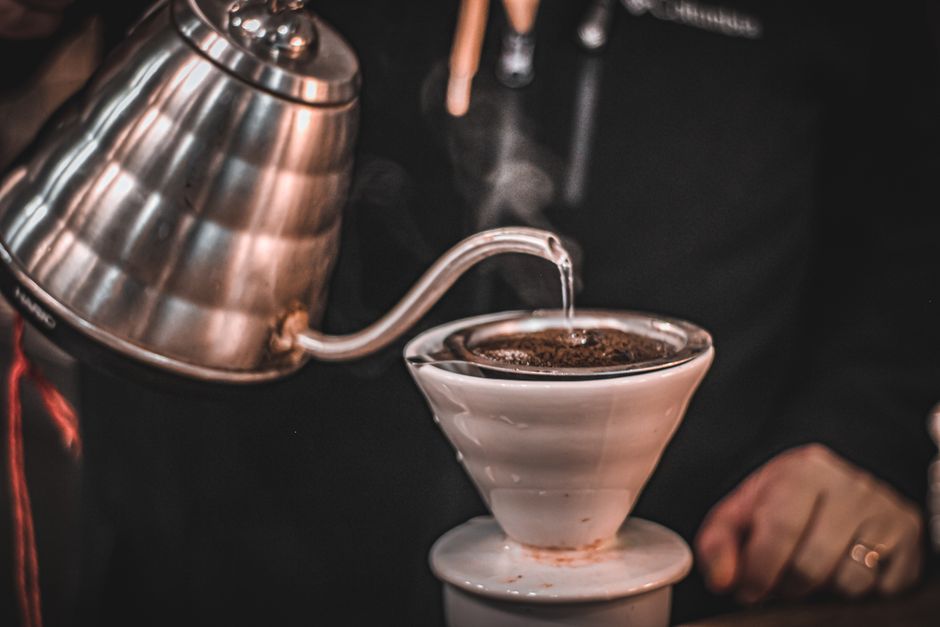
Is Pour Over Coffee Better Than a French Press?
Neither pour over nor French press is objectively better. French press delivers body, oils, and richness through a metal mesh filter and full immersion, while pour over delivers clarity, brightness, and flavor separation through a paper filter and percolation. The choice comes down to the filter, the grind, and how water meets the grounds.
Key Takeaways
- The primary difference is texture: French press keeps more oils and delivers fuller body, while paper filters strip oils and sediment for a clearer cup.
- French press always leaves some grit and oil at the bottom of the cup; pour over eliminates grit entirely.
- French press calls for a coarse grind and roughly a four-minute steep at about 200°F; pour over typically uses a medium to medium-fine grind.
- Pour over is harder to brew consistently — channeling, over-agitation, and uneven extraction are its biggest risks, which a gooseneck kettle helps control.
- French press cleanup is messier; pour-over cleanup is easier but paper filters carry more waste than a reusable mesh strainer.
- The 15-15-15 coffee rule is a ratio memory aid, not a standard recipe; a 1:15 coffee-to-water ratio works as a starting point for both methods.
Neither pour over nor French press is objectively better. French press delivers body, oils, and richness through a metal mesh filter and full immersion, while pour over delivers clarity, brightness, and flavor separation through a paper filter and percolation. The choice comes down to the filter, the grind, and how water meets the grounds.
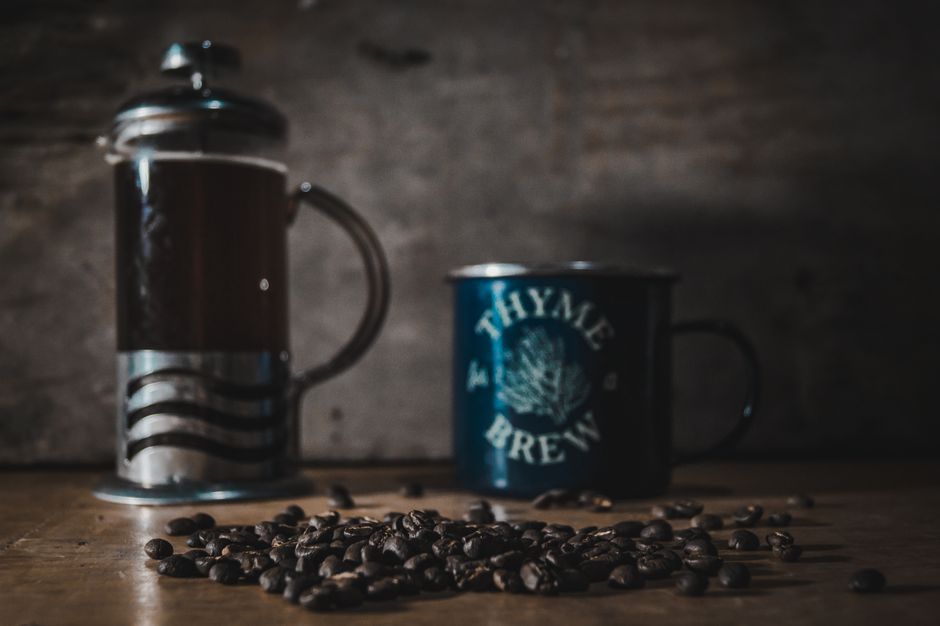
No, neither method is objectively better. The choice comes down to what you want in the cup: French press delivers body, oils, and richness, while pour over delivers clarity, brightness, and delicate flavor separation. Both methods use the same two ingredients, coffee and water. The real differences come from the filter, the grind, and how the water meets the grounds.
What actually separates pour over from French press?
The core mechanical difference is the filter. Pour over uses a paper filter that traps sediment and most coffee oils, while a French press uses a metal mesh strainer that lets oils and fine particles pass through into the cup, according to Daniel Norris. This single design choice drives nearly every other contrast in taste, texture, and cleanup.
French press is a full immersion method. The grounds steep in water for around four minutes before you press the plunger and pour. Pour over is percolation: water passes through the coffee bed as you pour, extracting as it flows. The contact pattern is fundamentally different.
The French press has three components: a carafe, a plunger, and a strainer, as Larry's Coffee notes. A pour-over kit consists of a carafe or dripper plus a paper filter. The French press was invented in Italy in the 1920s, according to the same source.
How do pour over and French press taste different in the cup?
French press coffee is intense and full-bodied because more of the beans' oils remain in the cup, which adds richness, according to Larry's Coffee. Pour over highlights clarity, brightness, and delicate flavor notes that oils and sediment can mask, as Stone Creek Coffee explains.

The texture gap is the most reliable difference tasters report. Reddit users in r/Coffee describe the distinction as mouthfeel versus transparency. French press always leaves a bit of grit and oil at the bottom of the cup, according to Daniel Norris. Pour over eliminates the grit issue entirely.
What grind size and recipe does each method need?
French press requires a coarse grind, while pour over typically calls for a medium to medium-fine grind, according to Larry's Coffee. A coarse grind reduces the amount of fine particles that slip through the mesh strainer and create grit in the cup.
A French press starting point is a heaping tablespoon of grounds, roughly 7 to 8 grams, for every 6.7 ounces of water, with water around 200°F and a four-minute steep, according to Larry's Coffee. Fellow notes that French press generally uses a higher coffee-to-water ratio than pour-over devices.
Enjoying this article?
Get weekly coffee insights delivered to your inbox.
The Complete World of Coffee
615 pages of evidence-based coffee education · $54.99
A standard kitchen formula of 16 ounces of water to 6 tablespoons of coffee works as a baseline reference, according to Fellow. Blooming applies to both methods: pour a small amount of water over the grounds and let it sit for about 30 seconds before adding the rest of the brew water.
Which method is harder to brew consistently?
Pour over is harder to brew consistently. The main risk is channeling, over-agitation, and uneven extraction if your pour is careless, according to a YouTube comparison. Pour over also gives you less control over contact time, which can produce a weak brew if you are not attentive, as Larry's Coffee notes.
French press is more forgiving of pour technique because the grounds stay fully submerged for the entire steep. You do not need to manage water flow the same way. A gooseneck kettle is the practical fix for pour-over control. One Quora user reports that superior pour-over results essentially require a narrow-necked kettle, according to Quora.
What is cleanup like for each method, and which creates more waste?
French press cleanup is messier. Spent grounds get stuck in the mesh strainer and need rinsing out, sometimes with extra effort to dislodge particles from the metal weave, according to Daniel Norris. Pour-over cleanup is as simple as tossing the paper filter and grounds into the compost or trash.
The trade-off is waste. Paper filters are disposable and carry more waste and environmental impact than a reusable mesh strainer, as Larry's Coffee points out. A practical middle ground is using reusable metal or cloth pour-over filters, which reduce the waste concern while still trapping most sediment.
Which brewing method fits your routine and the coffee you drink?
Pour over suits drinkers chasing clarity, single-origin flavor separation, and a fast cleanup, according to Stone Creek Coffee. French press suits drinkers who want body, richness, and a more forgiving process, as Daniel Norris describes.
For readers who want to go deeper on pour-over technique specifically, Pour Over Coffee: From Beginner to Advanced Enthusiast covers brewers, filters, water chemistry, grind size, pour structure, and advanced techniques. For readers who want a broader reference across origins, processing, roasting, sensory science, and brewing, Lyons Den Publishers offers The Complete World of Coffee: The History, Science, and Craft of Specialty Coffee.
Both books frame these methods as options for different goals, not as a verdict on which brewer wins. The right choice depends on the coffee you drink and the cup you want.
How do pour over and French press compare to drip, AeroPress, and espresso?
Drip sits closest to pour over in clarity but removes the manual pour variable, according to Larry's Coffee. AeroPress combines immersion with pressure and a paper filter, landing between the two methods in body. Espresso concentrates both texture and intensity far beyond either method through pressure.
Caffeine content differences between pour over and French press are driven mainly by dose and ratio, not the brewer itself, according to Fellow. If you use more coffee in a French press, you get more caffeine. For milk drinks like a latte, neither pour over nor French press is the conventional base. Espresso is the standard foundation for milk-based drinks.
What is the 15-15-15 coffee rule, and does it apply here?
The 15-15-15 coffee rule is commonly circulated as 15 grams of coffee, 15 times that weight in water (225 grams), brewed for 15 minutes. A 15-minute steep is far longer than standard French press guidance of about four minutes, according to Larry's Coffee.
The rule is a memorization aid for ratio, not a universal recipe. Grind size and temperature still matter, and a 15-minute immersion would likely over-extract most coffees. The underlying ratio concept does translate to both methods: a 1:15 coffee-to-water ratio works as a starting point for pour over and French press alike, as Fellow notes.
Key Takeaways
- The primary difference between pour over and French press is texture: French press keeps more oils and delivers fuller body, while paper filters strip oils and sediment for a clearer cup.
- French press always leaves some grit and oil at the bottom of the cup; pour over eliminates grit entirely.
- French press calls for a coarse grind and roughly a four-minute steep at about 200°F; pour over typically uses a medium to medium-fine grind.
- Pour over's biggest weakness is inconsistency from channeling, over-agitation, and uneven extraction, which a gooseneck kettle helps control.
- French press cleanup is messier because grounds lodge in the mesh strainer, while pour-over cleanup is as easy as discarding the filter, though paper filters carry more waste.
- French press generally uses a higher coffee-to-water ratio than pour-over devices.
- The 15-15-15 coffee rule is a ratio memory aid, not a standard recipe; its 15-minute steep runs well past typical French press guidance.
References
- Pour Over vs French Press : r/Coffee
- French Press vs. Pour Over? (r/pourover)
- Can you taste a difference between pour over and French press coffee? (Quora)
- French Press vs Pour Over: Why I Keep Coming Back to the V60
- How to Brew the Best Coffee (Pour Over Vs. French Press)
- Pour Over vs French Press: Taste, Texture, and Brewing
- French Press vs Pour Over | Coffee Tips & Guides
- French Press vs. Pour Over - Fellow
Key Takeaways
- 1.The primary difference is texture: French press keeps more oils and delivers fuller body, while paper filters strip oils and sediment for a clearer cup.
- 2.French press always leaves some grit and oil at the bottom of the cup; pour over eliminates grit entirely.
- 3.French press calls for a coarse grind and roughly a four-minute steep at about 200°F; pour over typically uses a medium to medium-fine grind.
- 4.Pour over is harder to brew consistently — channeling, over-agitation, and uneven extraction are its biggest risks, which a gooseneck kettle helps control.
- 5.French press cleanup is messier; pour-over cleanup is easier but paper filters carry more waste than a reusable mesh strainer.
- 6.The 15-15-15 coffee rule is a ratio memory aid, not a standard recipe; a 1:15 coffee-to-water ratio works as a starting point for both methods.
Sources
- 1.Pour Over vs French Press : r/Coffee — https://www.reddit.com/r/Coffee/comments/t01k8e/pour_over_vs_french_press/
- 2.French Press vs. Pour Over? (r/pourover) — https://www.reddit.com/r/pourover/comments/1hw7wp6/french_press_vs_pour_over/
- 3.Can you taste a difference between pour over and French press coffee? (Quora) — https://www.quora.com/Can-you-taste-a-difference-between-pour-over-and-French-press-coffee-Are-there-specific-factors-that-make-the-difference
- 4.French Press vs Pour Over: Why I Keep Coming Back to the V60 — https://www.danielnorris.com/blog/french-press-vs-pour-over
- 5.How to Brew the Best Coffee (Pour Over Vs. French Press) — https://larryscoffee.com/pages/how-to-brew-the-best-coffee-pour-over-vs-french-press
- 6.Pour Over vs French Press: Taste, Texture, and Brewing — https://www.youtube.com/watch?v=DQPcMl1knyM
- 7.French Press vs Pour Over | Coffee Tips & Guides — https://www.stonecreekcoffee.com/blogs/news/french-press-vs-pour-over-which-brewing-method-is-right-for-you
- 8.French Press vs. Pour Over - Fellow — https://fellowproducts.com/blogs/learn/french-press-vs-pour-over
Written by
Keith E. Lyons
Specialty coffee author, educator, and founder of Lyons Den Publishing. Author of The Complete World of Coffee.