Topic Hub
Coffee Science
Coffee is one of the most chemically complex beverages in the world, with over 1,000 identified aroma compounds. This hub connects resources on extraction chemistry, roasting reactions, water chemistry, and the physics of brewing.
Overview
The science of coffee spans chemistry, physics, biology, and sensory science. At its core, brewing is a solvent extraction process: hot water dissolves soluble compounds from ground coffee. The key variables are grind size, water temperature, contact time, coffee-to-water ratio, and water chemistry.
Roasting drives the Maillard reaction and caramelization, creating hundreds of new compounds from the green coffee's sugars, amino acids, and acids. The roast profile determines which flavors are developed and which are lost.
Water makes up 98 percent of a brewed cup, and its mineral content dramatically affects extraction. Calcium and magnesium facilitate extraction of flavor compounds, while bicarbonate acts as a buffer that can mute acidity. Understanding water chemistry is one of the most impactful things a brewer can learn.
Start Here
New to coffee science? Begin with these resources.
From The Complete World of Coffee
- Chapter 5: Extraction Science
- Chapter 6: Chemistry of Roasting
Featured Articles
Editorial highlights from the Coffee Science hub.
Is Coffee Healthy? Decoding the Complexities of Your Brew
Discover the truth about coffee and your health. Beyond simple labels, I dive into how bioactivity, dosage, and preparation methods influence your body in...
ScienceWhen to Stop Drinking Coffee for Better Sleep Quality
Caffeine is a powerful stimulant, but its impact on sleep is often underestimated. Discover how caffeine metabolism works and the optimal timing to enjoy...
ScienceDebunking Coffee Myths: Separating Fact from Folklore
Coffee is surrounded by persistent myths that confuse even seasoned drinkers. I clarify common misconceptions about caffeine, dehydration, and health,...
Popular Guides
Most-visited pages in this topic area.
Acids in Coffee
Acids are a primary contributor to coffee's flavor, providing brightness, complexity, and the characteristic liveliness that distinguishes specialty coffee. Coffee contains both organic acids (citric, malic, acetic, quinic) and phenolic acids (chlorogenic acids). The acid content and profile change dramatically during roasting: green coffee is high in chlorogenic and citric acids, while roasted coffee has reduced chlorogenic acids but increased quinic and acetic acids from degradation reactions.
ChemistrySugars and Carbohydrates in Coffee
Sugars and carbohydrates constitute approximately 50 to 60% of green coffee's dry weight and play a crucial role in roasting chemistry, flavor development, and body. The primary sugars are sucrose (6 to 9%), reducing sugars (glucose and fructose, 0.1 to 1%), and polysaccharides (arabinogalactans, mannans, cellulose). During roasting, sucrose and reducing sugars are consumed by the Maillard reaction and caramelization, producing the brown pigments, aromatic compounds, and sweet flavors characteristic of roasted coffee.
ChemistryCrema Formation and Chemistry
Crema is the golden-brown foam layer that forms on top of properly extracted espresso. It is an emulsion of <a href="/coffee-science/lipids-and-coffee-oil">coffee oils</a>, CO2 gas, and melanoidins, stabilized by surface-active compounds. Crema is a hallmark of quality espresso and contributes to aroma, mouthfeel, and visual appeal. The formation, stability, and chemistry of crema involve complex interactions between lipids, gases, and surfactants.
ChemistryEmulsions in Coffee
Emulsions are mixtures of two immiscible liquids (like oil and water) where one is dispersed as tiny droplets within the other. In coffee, emulsions play a critical role in crema formation, body, mouthfeel, and flavor release. Espresso extraction produces an oil-in-water emulsion where <a href="/coffee-science/lipids-and-coffee-oil">coffee oils</a> are dispersed as micro-droplets in the aqueous coffee phase, stabilized by natural surfactants (melanoidins, proteins, polysaccharides).
SensorySensory Science and Flavor Perception
Sensory science is the systematic study of how humans perceive food and beverage attributes through their senses. In coffee, sensory science encompasses taste (gustation), smell (olfaction), mouthfeel (tactile), and the complex interactions between them that create the overall flavor experience. Understanding sensory science is essential for coffee professionals, from cuppers evaluating green coffee to baristas dialing in espresso.
ChemistryOxidation and Staling
Oxidation is the chemical reaction between coffee compounds and oxygen, leading to staling and flavor degradation. Oxidation affects both roasted coffee (during storage) and brewed coffee (after brewing). In roasted coffee, oxidation primarily affects lipids (<a href="/coffee-science/lipids-and-coffee-oil">triglycerides</a>), producing rancid off-flavors. In brewed coffee, oxidation degrades volatile aromatics and phenolic compounds, causing loss of flavor and development of flat, cardboard-like tastes. Understanding oxidation is essential for proper coffee storage and freshness management.
Recently Updated
Fresh content and latest revisions.
Beginner Guides
Start here if you're new to coffee science.
Paper Vs Metal Coffee Filter
Filter media fundamentally alters the tactile and chemical composition of brewed coffee. Paper filters trap insoluble coffee oils (diterpenes) and microscopic fines, yielding crisp flavor clarity and a clean cup. Reusable metal mesh filters allow coffee lipids and micro-sediment to pass into the brew, producing a heavier body and richer texture.
ComparisonCold Brew Vs Iced Coffee
Cold brew and iced coffee may both be served cold over ice, but their chemical compositions and flavor profiles differ dramatically. Cold brew uses long room-temperature immersion (12-24 hours), suppressing volatile organic acids while producing a low-acid, sweet concentrate. Iced coffee (specifically Japanese flash brew) extracts hot water solubles rapidly before chilling instantly over ice, capturing delicate aromatics and vibrant acidity.
Coffee ScienceAntioxidants in Coffee
Coffee constitutes a complex chemical matrix featuring over 1,000 bioactive compounds. The predominant polyphenols are chlorogenic acids (CGA), specifically 5-O-caffeoylquinic acid, which comprise 6% to 10% of green Arabica coffee’s dry weight and up to 14% in Robusta. During the roasting process, thermal degradation transforms these acids into quinic acid and caffeic acid, while simultaneously initiating the Maillard reaction to produce melanoidins. These high-molecular-weight nitrogenous polymers contribute significantly to the brew's total antioxidant capacity (TAC). A standard 200ml serving of coffee delivers a potent dose of 70mg to 350mg of chlorogenic acids, alongside hydroxycinnamic acids like ferulic and p-coumaric acids. These molecules neutralize reactive oxygen species (ROS) through electron donation, providing a robust defense against cellular oxidative damage.
Coffee ScienceQuakers
<h2>Summary of Quaker Identification and Prevention</h2><ul><li><strong>Biochemical Profile:</strong> Characterized by a lack of sucrose, preventing caramelization during the roasting process.</li><li><strong>Visual Markers:</strong> Identified after roasting by a pale, yellowish-tan color compared to the dark brown of healthy seeds.</li><li><strong>SCA Standard:</strong> Zero tolerance for quakers in 100g of Grade 1 Specialty Coffee.</li><li><strong>Prevention:</strong> Managed through selective picking of deep-red cherries and rigorous flotation during wet processing to remove low-density seeds.</li></ul>
Coffee ScienceShade Grown
<h2>Comparative Cultivation Metrics</h2><table><thead><tr><th>Feature</th><th>Shade-Grown (Polyculture)</th><th>Sun-Grown (Monoculture)</th></tr></thead><tbody><tr><td>Ripening Duration</td><td>9 to 11 months</td><td>6 to 8 months</td></tr><tr><td>Avian Biodiversity</td><td>150+ species per hectare</td><td><15 species per hectare</td></tr><tr><td>Bean Density</td><td>High (Strictly Hard Bean)</td><td>Medium to Low</td></tr><tr><td>Nitrogen Input</td><td>Natural fixation (Inga spp.)</td><td>Synthetic NPK Fertilizers</td></tr><tr><td>Soil Erosion Rate</td><td>Low (Leaf litter protection)</td><td>High (Surface runoff)</td></tr></tbody></table>
Coffee ScienceCoffee Leaf Rust
Hemileia vastatrix belongs to the order Pucciniales and is an obligate biotrophic fungus, meaning it requires living host tissue to survive. The infection cycle begins when urediniospores are deposited on the abaxial (underside) surface of the coffee leaf, typically via wind or rain splash. Germination occurs only in the presence of free water—such as dew or rainfall—within a temperature range of 15°C to 28°C. Upon germination, the fungus enters the leaf through the stomata and establishes a mycelium that colonizes the internal tissue. The visual manifestation of the disease begins as small, chlorotic spots that expand into characteristic orange, powdery pustules. These pustules contain thousands of spores capable of further infection. The physiological impact includes a rapid reduction in photosynthetic capacity and the eventual abscission of the leaf. Severe cases lead to 'dieback,' where the plant's branches wither due to carbohydrate depletion, often resulting in the death of the tree or a total loss of the following year's crop.
Coffee ScienceCoffee Borer Beetle
<h2>Environmental Management and Control</h2><p>Control of <i>H. hampei</i> requires a multi-faceted approach, as the beetle's internal nesting protects it from standard contact insecticides. Biological control often involves the entomopathogenic fungus <i>Beauveria bassiana</i>, which is applied at a concentration of 1x10^9 spores per milliliter. The fungus penetrates the beetle's exoskeleton, leading to mortality within 4 to 7 days. Additionally, the introduction of the parasitoid wasp <i>Cephalonomia stephanoderis</i> has proven effective in Latin American plantations, as the wasp enters the berry to prey upon borer larvae. Post-harvest, meticulous sanitation of processing equipment and the use of GrainPro or hermetic storage bags prevent cross-contamination in the warehouse environment.</p>
Coffee ScienceMelanoidin
Melanoidins represent the final structural evolution of coffee chemistry during thermal processing, comprising a diverse group of nitrogenous, brown-colored macromolecules with molecular weights ranging from 10,000 to 100,000 Daltons. Their formation initiates at approximately 160°C (320°F) through the Maillard reaction, where reducing sugars like glucose and fructose react with free amino acids and proteins. This sequence generates reactive intermediates—including furfurals and dehydro-reductones—which subsequently undergo polycondensation. In Arabica coffee, melanoidin concentration increases linearly with roast development, typically accounting for 15% to 25% of the total beverage dry matter in medium-to-dark roasts. These polymers are categorized by solubility; water-soluble melanoidins migrate into the extract, while insoluble variants remain within the cellular matrix of the spent grounds. The incorporation of nitrogen into heterocyclic ring structures, specifically pyrazines and pyrroles, differentiates these pigments from simple caramelization products and dictates the aromatic intensity of the roasted bean.
Coffee ScienceTrigonelline
<h2>Summary of Chemical Properties</h2><ul><li><strong>Chemical Formula:</strong> C7H7NO2</li><li><strong>Melting Point:</strong> 218°C (decomposes)</li><li><strong>Solubility:</strong> Highly soluble in water and ethanol</li><li><strong>Occurrence:</strong> ~1.0% in Arabica; ~0.7% in Robusta</li><li><strong>Primary Metabolite:</strong> Nicotinic Acid (Vitamin B3)</li></ul>
Advanced Guides
Technical deep-dives for experienced readers.
Acids in Coffee
Acids are a primary contributor to coffee's flavor, providing brightness, complexity, and the characteristic liveliness that distinguishes specialty coffee. Coffee contains both organic acids (citric, malic, acetic, quinic) and phenolic acids (chlorogenic acids). The acid content and profile change dramatically during roasting: green coffee is high in chlorogenic and citric acids, while roasted coffee has reduced chlorogenic acids but increased quinic and acetic acids from degradation reactions.
ChemistrySugars and Carbohydrates in Coffee
Sugars and carbohydrates constitute approximately 50 to 60% of green coffee's dry weight and play a crucial role in roasting chemistry, flavor development, and body. The primary sugars are sucrose (6 to 9%), reducing sugars (glucose and fructose, 0.1 to 1%), and polysaccharides (arabinogalactans, mannans, cellulose). During roasting, sucrose and reducing sugars are consumed by the Maillard reaction and caramelization, producing the brown pigments, aromatic compounds, and sweet flavors characteristic of roasted coffee.
ChemistryCrema Formation and Chemistry
Crema is the golden-brown foam layer that forms on top of properly extracted espresso. It is an emulsion of <a href="/coffee-science/lipids-and-coffee-oil">coffee oils</a>, CO2 gas, and melanoidins, stabilized by surface-active compounds. Crema is a hallmark of quality espresso and contributes to aroma, mouthfeel, and visual appeal. The formation, stability, and chemistry of crema involve complex interactions between lipids, gases, and surfactants.
ChemistryEmulsions in Coffee
Emulsions are mixtures of two immiscible liquids (like oil and water) where one is dispersed as tiny droplets within the other. In coffee, emulsions play a critical role in crema formation, body, mouthfeel, and flavor release. Espresso extraction produces an oil-in-water emulsion where <a href="/coffee-science/lipids-and-coffee-oil">coffee oils</a> are dispersed as micro-droplets in the aqueous coffee phase, stabilized by natural surfactants (melanoidins, proteins, polysaccharides).
SensorySensory Science and Flavor Perception
Sensory science is the systematic study of how humans perceive food and beverage attributes through their senses. In coffee, sensory science encompasses taste (gustation), smell (olfaction), mouthfeel (tactile), and the complex interactions between them that create the overall flavor experience. Understanding sensory science is essential for coffee professionals, from cuppers evaluating green coffee to baristas dialing in espresso.
ChemistryOxidation and Staling
Oxidation is the chemical reaction between coffee compounds and oxygen, leading to staling and flavor degradation. Oxidation affects both roasted coffee (during storage) and brewed coffee (after brewing). In roasted coffee, oxidation primarily affects lipids (<a href="/coffee-science/lipids-and-coffee-oil">triglycerides</a>), producing rancid off-flavors. In brewed coffee, oxidation degrades volatile aromatics and phenolic compounds, causing loss of flavor and development of flat, cardboard-like tastes. Understanding oxidation is essential for proper coffee storage and freshness management.
ChemistryVolatile Compounds and Aroma Chemistry
Volatile compounds are the chemicals that evaporate from coffee at room temperature and are detected by the olfactory system. Over 1,000 volatile compounds have been identified in roasted coffee, though only about 20 to 30 are present at levels above their sensory threshold and contribute significantly to coffee aroma. Aroma chemistry is the study of how these compounds are formed during roasting, how they interact, and how they are perceived.
ChemistryLipids and Coffee Oil
Lipids (coffee oil) constitute approximately 10 to 15% of roasted coffee by weight and play a critical role in flavor, body, crema formation, and shelf life. Coffee lipids are primarily triglycerides (75%), followed by diterpenes (cafestol and kahweol, 15 to 19%), free fatty acids, sterols, and tocopherols. The lipid content varies by species (Arabica ~15%, Robusta ~10%) and affects body, mouthfeel, and crema stability in espresso.
RoastingRoasting Chemistry
Coffee roasting is a complex thermal process that transforms green coffee beans into the aromatic, flavorful brown beans used for brewing. Roasting involves over 1,000 chemical reactions, primarily the Maillard reaction, caramelization, pyrolysis, and Strecker degradation. These reactions create hundreds of new compounds responsible for coffee's characteristic aroma, flavor, body, and color. Understanding roasting chemistry is essential for roasters to control flavor development and consistency.
Related Books
Books from Lyons Den Publishing.

The Complete World of Coffee: The History, Science, and Craft of Specialty Coffee
615 pages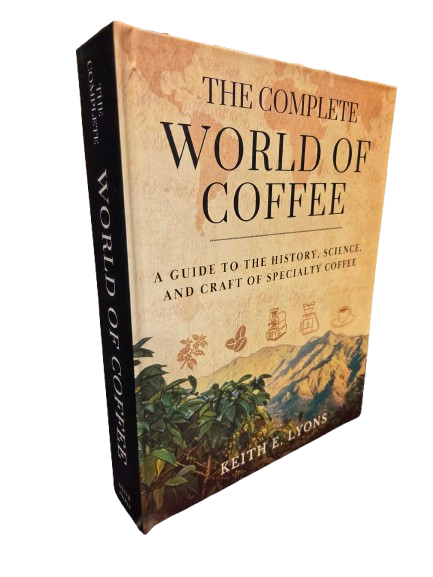
The Complete World of Coffee: The History, Science, and Craft of Specialty Coffee
615 pages
The Complete World of Coffee: The History, Science, and Craft of Specialty Coffee
615 pages
Pour Over Coffee
103 pages
Pour Over Coffee: From Beginner to Advanced Enthusiast
103 pagesRelated Blog Posts
Articles and essays from the Coffee Science hub.
When to Stop Drinking Coffee for Better Sleep Quality
Caffeine is a powerful stimulant, but its impact on sleep is often underestimated. Discover how caffeine metabolism works and the optimal timing to enjoy...
ScienceIs Coffee Healthy? Decoding the Complexities of Your Brew
Discover the truth about coffee and your health. Beyond simple labels, I dive into how bioactivity, dosage, and preparation methods influence your body in...
ScienceDebunking Coffee Myths: Separating Fact from Folklore
Coffee is surrounded by persistent myths that confuse even seasoned drinkers. I clarify common misconceptions about caffeine, dehydration, and health,...
Knowledge Tree
Every page in this hub (49 total), organized by content type.
Explore Further
Ready to go deeper? These resources cover advanced topics.
Other Topic Hubs

Curated by
Keith E. Lyons
Specialty coffee author, educator, and founder of Lyons Den Publishing. Author of The Complete World of Coffee, a 615-page guide to coffee origins, brewing science, and sensory education.
Learn more about Keith E. Lyons →